Environmental Protection in Uttar Pradesh: How Massive Tree Plantation Drives are Restoring Lucknow’s Green Canopy
Rapid urbanization in Lucknow and central UP has heightened heat islands and air pollution. Discover how community-led native afforestation is bringing back clean air and biodiversity.
Executive Summary & Key Highlights
- Urban Lucknow has witnessed a 14% contraction of dense tree cover over the last two decades.
- Over 25,000 native saplings (Neem, Peepal, Banyan, Jamun) planted with an 88% survival rate.
- Citizen involvement through "Adopt-a-Tree" drives ensures ongoing watering and tree guard protection.
- Community afforestation helps naturally filter particulate matter (PM 2.5 and PM 10) during winter smog.

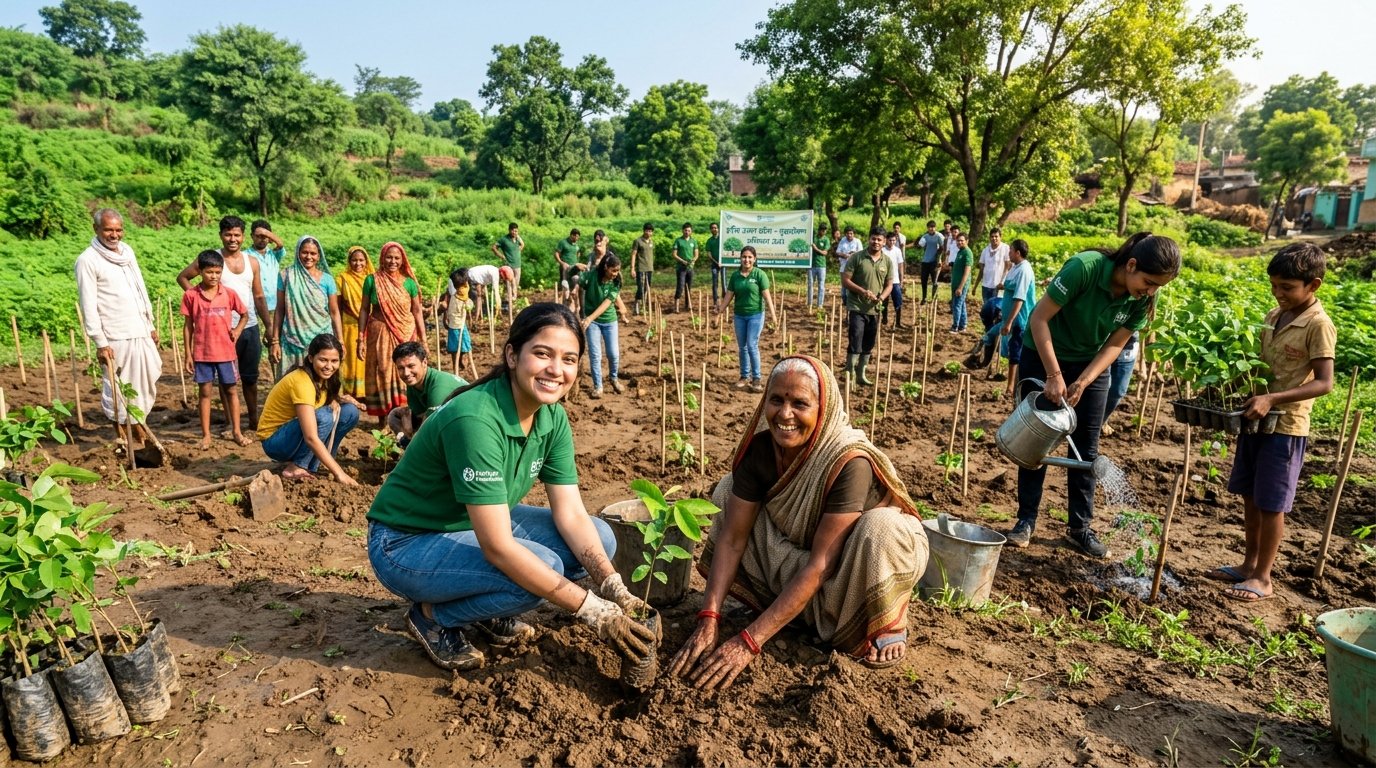
On-ground field photo & initiative highlights
The Urgent Need for Green Belts in Central Uttar Pradesh
Lucknow, the historic capital of Uttar Pradesh, has experienced unprecedented infrastructural and demographic expansion over the last twenty years. While economic growth has connected communities and modernized transportation, it has also brought severe ecological consequences: expanding asphalt, concrete corridors, declining water tables, and worsening urban heat islands.
During the summer months, urban temperatures frequently exceed 44°C, creating unbearable heat for street vendors, daily wage workers, and school children. Come winter, heavy smog laden with toxic particulate matter (PM 2.5 and PM 10) blankets the city, aggravating bronchial ailments among children and senior citizens.
Against this backdrop, passive conservation is no longer adequate. What Uttar Pradesh requires is active, aggressive, community-anchored afforestation.
Why Native Trees Matter: Neem, Peepal, Banyan, and Jamun
A common mistake in quick greening initiatives is the planting of non-native ornamental trees like Eucalyptus or Conocarpus, which consume disproportionate groundwater and support minimal local fauna. At ITLC Foundation, our environmental research team adheres strictly to indigenous biodiverse species:
- Neem (*Azadirachta indica*): Renowned as nature's air purifier, Neem trees release oxygen for extended periods, possess antibacterial properties, and thrive in semi-arid soil without demanding excessive groundwater.
- Peepal (*Ficus religiosa*): Capable of releasing oxygen round-the-clock, Peepal provides a broad leafy canopy that captures dust and airborne pollutants while housing over 40 species of birds and pollinators.
- Banyan (*Ficus benghalensis*): Deep-rooted and resilient, Banyan trees act as soil anchors, preventing soil erosion along riverbanks and peri-urban roadways.
- Jamun & Bel (*Syzygium cumini* & *Aegle marmelos*): In addition to cooling the atmosphere, these fruit-bearing native trees provide nourishment for urban wildlife and local birds.
The "Adopt-a-Tree" Model: Beyond Mere Photo-Op Planting
The fundamental downfall of many corporate plantation drives is abandonment: saplings are planted for photographs during monsoon season and left to wither under the scorching summer sun without irrigation or fencing.
To overcome this, ITLC Foundation pioneered the Adopt-a-Tree Stewardship Initiative:
- Geo-tagged Saplings: Every batch of saplings planted across Golf City, Mohanlalganj, and outer ring roads in Lucknow is mapped.
- Local Caretaker Networks: We partner with nearby small shopkeepers, school groundskeepers, and residential societies, providing them with watering cans, organic compost, and protective iron tree guards.
- Bi-weekly Maintenance Patrols: Volunteer teams conduct regular weeding, staking, and drip-watering rounds, achieving an industry-leading 88% survival rate across over 25,000 planted saplings.
Citizen Action: What You Can Do Today
Environmental conservation is not the exclusive domain of government agencies; it starts on your own balcony, lane, and community park. You can:
- Pledge a Tree: Support the cost of a native sapling, protective guard, and 2-year maintenance through ITLC Foundation.
- Join Weekend Green Drives: Spend 2 hours every Sunday morning digging pits, planting saplings, and greening public schools.
- Harvest Rainwater: Prevent urban runoff by ensuring open soil patches in your home compound to recharge the Lucknow aquifer.
Together, we can build a resilient, breathable, and verdant Uttar Pradesh for generations to come.
ITLC Foundation Grassroots Research & Community Development Team
Key Questions About Our Environment Protection Initiatives
Find answers to the most common questions regarding our on-ground implementation, community beneficiaries, and support pathways.
Help us expand our community welfare drives across Uttar Pradesh
Every donation to ITLC Foundation directly funds native tree plantations, street animal feeding, educational kits, and clean water drives in Lucknow and surrounding rural clusters.